
Key takeaways
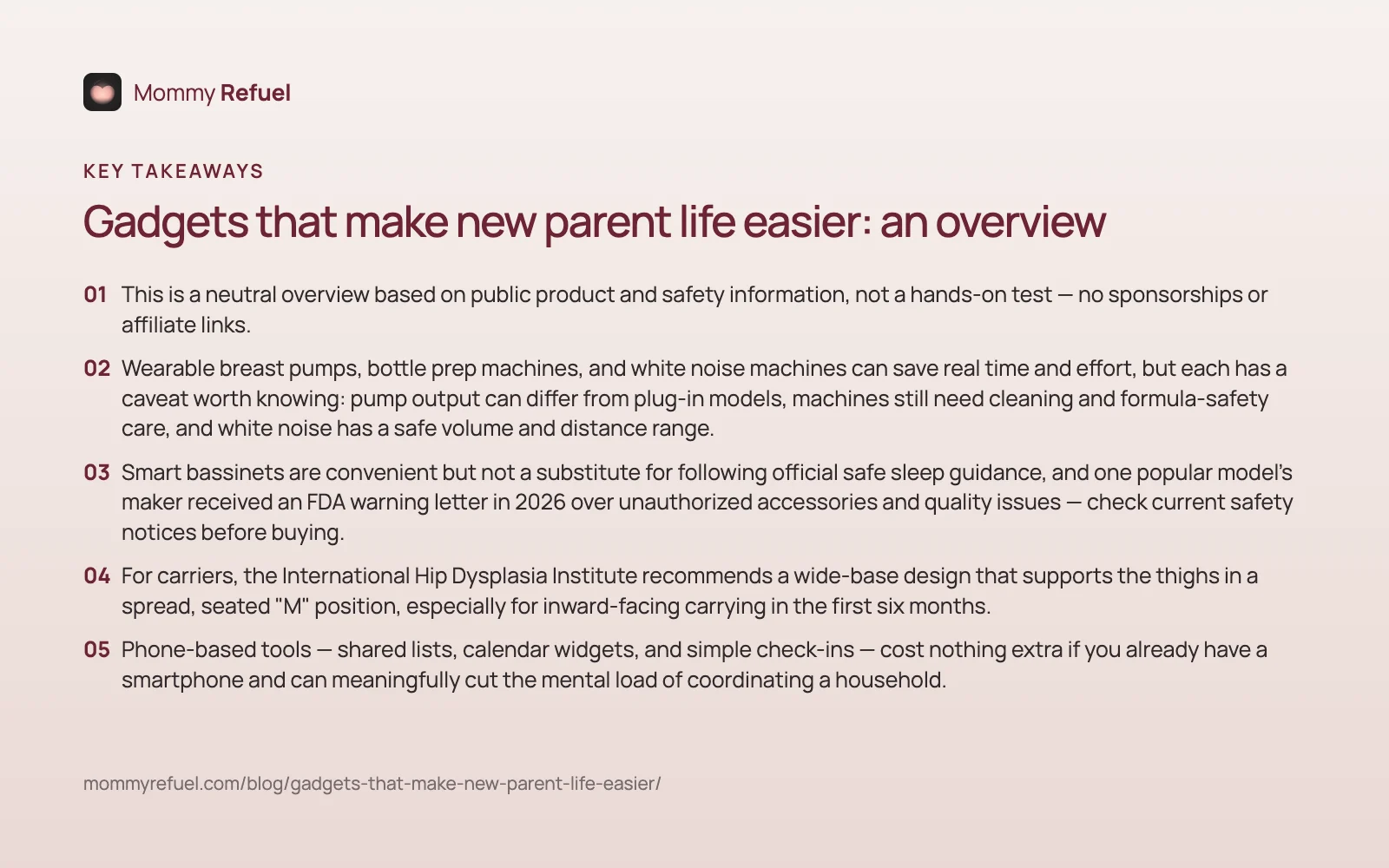
- This is a neutral overview based on public product and safety information, not a hands-on test — no sponsorships or affiliate links.
- Wearable breast pumps, bottle prep machines, and white noise machines can save real time and effort, but each has a caveat worth knowing: pump output can differ from plug-in models, machines still need cleaning and formula-safety care, and white noise has a safe volume and distance range.
- Smart bassinets are convenient but not a substitute for following official safe sleep guidance, and one popular model's maker received an FDA warning letter in 2026 over unauthorized accessories and quality issues — check current safety notices before buying.
- For carriers, the International Hip Dysplasia Institute recommends a wide-base design that supports the thighs in a spread, seated "M" position, especially for inward-facing carrying in the first six months.
- Phone-based tools — shared lists, calendar widgets, and simple check-ins — cost nothing extra if you already have a smartphone and can meaningfully cut the mental load of coordinating a household.
Wearable breast pumps: what do they actually offer?
Wearable, hands-free pumps fit inside a bra and let you move around, work, or care for an older child while pumping, instead of being tethered to an outlet and tubing. That mobility is the main draw. The trade-off worth knowing: some wearable pumps use smaller motors and battery power, and users and lactation professionals sometimes report lower suction or output compared with traditional plug-in hospital-grade pumps, which matters if you're pumping to build or maintain a full milk supply rather than for occasional convenience. Fit also matters more than with a traditional pump, since a poor flange seal reduces both comfort and output regardless of brand. If milk supply is a concern, it's worth discussing pump type with a lactation consultant rather than choosing based on convenience alone.
Bottle prep machines: convenience versus what still matters
These countertop machines mix formula with water at a set temperature and ratio, aiming to save the middle-of-the-night measuring and shaking. They can genuinely help with speed and consistency. What they don't remove is the need for proper hygiene: bottles, machine components, and water reservoirs still need regular cleaning per the manufacturer's instructions, and formula preparation guidance from your pediatrician or the product packaging (correct water-to-powder ratios, safe water source) still applies regardless of the appliance. A machine automates the mixing step, not the safety steps around it.
White noise machines: what's the actual safety guidance?
White noise can help some babies settle by masking sudden household sounds. But research on white noise devices marketed for infants, published in the journal Pediatrics, found that several tested devices could produce sound levels exceeding hospital nursery noise recommendations when played at high volume close to a baby, raising concern about potential hearing effects with prolonged loud exposure. The practical takeaway: keep the machine well away from the crib (commonly suggested at around 7 feet / 2 meters), use a lower volume setting rather than maximum, and avoid running it continuously all night at high volume. A white noise machine can be useful, but louder and closer isn't better.

Smart bassinets: what should you know before buying one?
Smart, motion-sensing bassinets aim to soothe a fussing baby automatically, often marketed around better sleep for both baby and parents. They're a real convenience for some families, but two things are worth checking before buying any smart sleep product: first, that it complies with current safe sleep guidance (a firm, flat, non-inclined sleep surface, no soft bedding, no weighted attachments); and second, its current regulatory status, since this category has drawn scrutiny. In 2026, the FDA issued a warning letter to the maker of a well-known smart bassinet over unauthorized accessory sizes that hadn't been reviewed for safety, and separate quality-control complaints. This doesn't mean the base product is unsafe, but it's a reminder to check for current recalls or safety notices for any specific model before purchase, and to only use accessories authorized by the manufacturer and any relevant regulator.
Baby carriers: what makes one "hip-healthy"?
The International Hip Dysplasia Institute recommends carriers that support a baby's thighs in a spread, seated position, often called the "M-position" — knees slightly higher than the bottom, thighs supported rather than dangling straight down. Wide-base carriers that spread support across the thighs are generally favored over narrow-base designs where the baby's full weight hangs from the crotch. IHDI also notes that inward-facing carrying is preferable in the first six months of rapid hip development, though it states that no carrier is proven to cause or prevent hip dysplasia on its own, and short-term or occasional use in a non-ideal position is unlikely to matter much. Fit and comfort for both baby and carrier still matter, so trying a carrier on before committing is worthwhile where possible.
What about phone-based tools instead of physical gadgets?
Not every helpful tool is a purchase. Shared shopping and to-do lists, calendar invites for appointments, and home-screen widgets for feeding or diaper timing cost nothing extra if you already carry a smartphone, and they reduce a different kind of load: remembering and coordinating, rather than physical tasks. An Apple Watch can make logging or checking something quick without reaching for a phone mid-feed. Mommy Refuel, a free iPhone app, brings a few of these into one place for the parenting side specifically — a short daily check-in, and tools to loop in a partner or support person through Care Network — without needing a separate gadget.
Questions mothers ask
Are wearable breast pumps as effective as plug-in pumps?
They offer mobility that plug-in pumps don't, but some users and lactation professionals report lower suction or output with certain wearable models. If building or maintaining milk supply is a priority, discuss pump type with a lactation consultant.
Is white noise safe for babies?
Used carefully, yes for most babies — but research has found some infant white noise devices can exceed recommended hospital noise levels at high volume placed close to a baby. Keep it at a lower volume and a few feet from the crib.
Do smart bassinets replace safe sleep guidelines?
No. Any smart bassinet still needs to meet safe sleep basics: a firm, flat, non-inclined surface with no soft bedding. Check for current recalls or safety notices on the specific model before buying.
What makes a baby carrier "hip-healthy"?
The International Hip Dysplasia Institute recommends wide-base carriers that support the thighs in a spread, seated M-position, with inward-facing carrying favored in the first six months.
Do I need to buy special baby tech gadgets?
No single gadget is required. Many families find phone-based tools (shared lists, calendar reminders, simple check-in apps) just as useful for reducing mental load as any physical device.
Sources

Articles from the Mommy Refuel team: practical, honest reading on maternal wellbeing and family life. General information, never a substitute for professional care.
This article is general information for wellbeing, not medical advice, diagnosis or treatment. If you are worried about your health or your baby’s, talk to your doctor, midwife or health visitor. In an emergency, or if you have thoughts of harming yourself, contact local emergency services now.