
Key takeaways
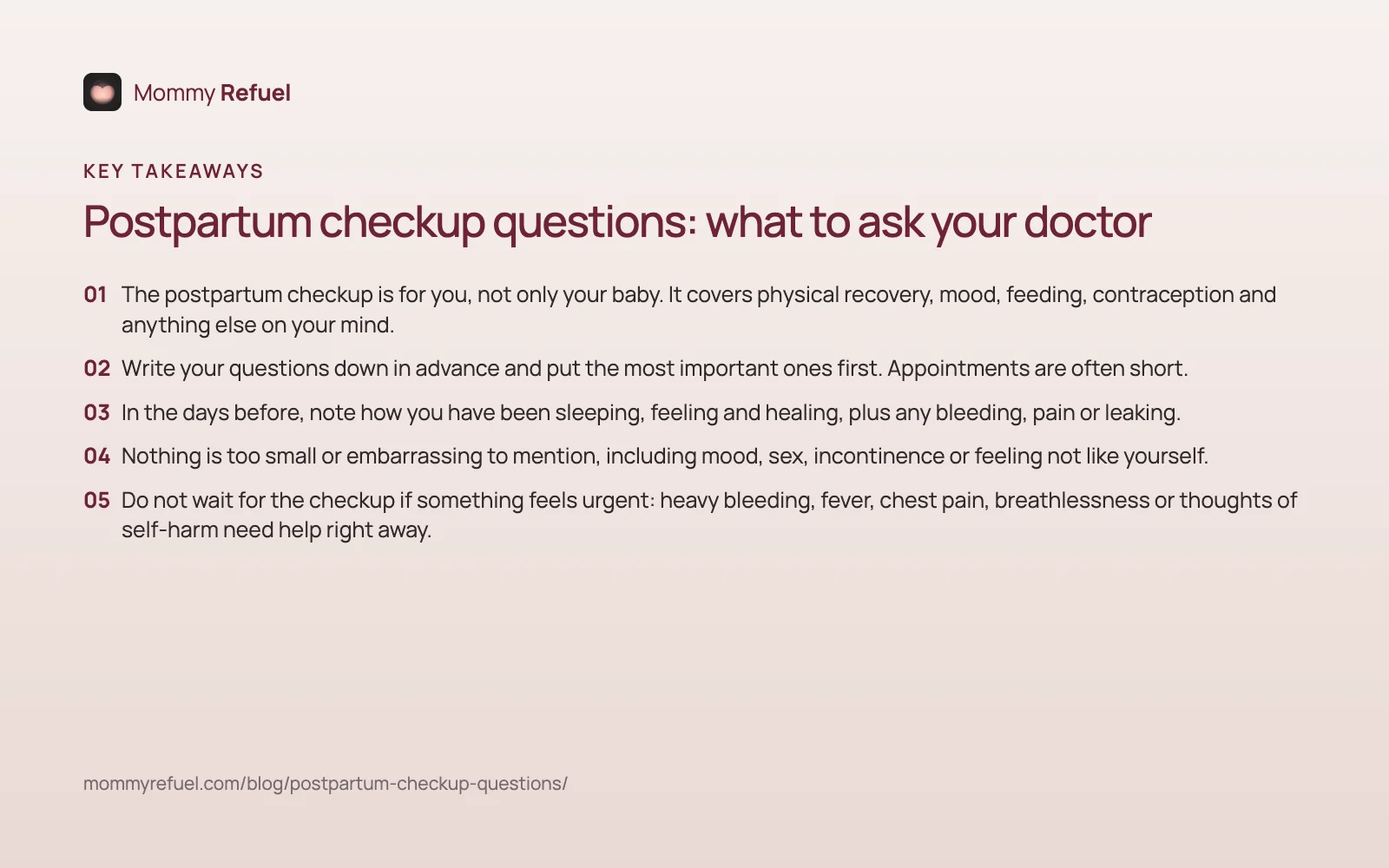
- The postpartum checkup is for you, not only your baby. It covers physical recovery, mood, feeding, contraception and anything else on your mind.
- Write your questions down in advance and put the most important ones first. Appointments are often short.
- In the days before, note how you have been sleeping, feeling and healing, plus any bleeding, pain or leaking.
- Nothing is too small or embarrassing to mention, including mood, sex, incontinence or feeling not like yourself.
- Do not wait for the checkup if something feels urgent: heavy bleeding, fever, chest pain, breathlessness or thoughts of self-harm need help right away.
What is the postpartum checkup for?
After the birth, a lot of attention goes to the baby. The postpartum checkup is the appointment that is about you. In the UK it is usually offered around six to eight weeks after birth. ACOG in the US recommends contact with your care team within the first three weeks, followed by a fuller visit no later than twelve weeks. Timing and format vary by country and provider, so ask your own team what to expect.
Whatever the schedule, the aim is similar: to check how your body is healing, how you are feeling emotionally, and to talk about feeding, contraception and any ongoing health conditions. It is also a good moment to raise anything that has been worrying you quietly.
Appointments can be short, and new parents are often exhausted, distracted or holding a baby at the same time. That is exactly why a bit of preparation helps.
Questions about physical recovery
Your body has done something enormous, whether you gave birth vaginally or by caesarean. Healing takes time, and it does not always follow a neat timeline. These questions help you understand what is expected for you and what would be a reason to get in touch sooner.
- Is my bleeding normal for this stage, and what would be a sign to call you?
- How are my stitches, tear or caesarean wound healing? What should I watch for?
- When can I return to exercise, lifting, driving and my usual activities?
- I still have pain in a specific place. Is that expected?
- Should my blood pressure, iron levels or any other results be checked again?
- I had a condition in pregnancy, such as high blood pressure or gestational diabetes. What follow-up do I need now?
- Do any medicines I take need reviewing?
Questions about mood and sleep
Many parents skip this part because they think it will sound like complaining. It is not. Your doctor or midwife expects to talk about how you are feeling.
- I have felt low, anxious or not like myself. Is this within the normal range, or could it be postpartum depression?
- My mood has changed since the first weeks. What support is available?
- I am not sleeping even when the baby sleeps. What might help?
- What signs mean I should come back sooner?
- Where can my partner get support if they are struggling too?
- Are there local groups, services or people I can lean on in the coming months?
It can help to answer honestly rather than saying "I am fine" out of habit. If you are unsure how to describe it, try naming what has changed: sleep, appetite, energy, how often you cry, or how much you enjoy things.
If you have been keeping a journal, even a few lines a day, it can help to look back through it before the visit. Journal insights can show recurring themes that are easy to forget when you are sitting in the consultation room.

Questions about feeding, contraception and pelvic floor
Feeding
- Feeding is painful or difficult. Can you refer me for feeding support?
- Are the medicines I take compatible with breastfeeding?
- I am thinking about changing how I feed. What should I know?
Contraception
- What contraception options suit me now, including while breastfeeding?
- When could I get pregnant again, and how long is it advisable to wait between pregnancies?
Pelvic floor and intimacy
- I leak when I cough, laugh or move. Is that something we can work on?
- How should I do pelvic floor exercises, and can I be referred to a pelvic health physiotherapist?
- Sex is painful or I do not feel ready. Is that common, and what can help?
- I have constipation, haemorrhoids or other bowel changes. What do you suggest?
These topics can feel awkward to raise, but they are common after birth and your care team is used to talking about them.
What to track in the days before
You do not need a spreadsheet. A few simple notes over the week or two before your appointment will make the conversation much more useful:
- Bleeding: roughly how heavy, and whether it has changed.
- Pain: where, when, and how it affects daily life.
- Sleep: how many hours in total, and whether you can fall asleep when you get the chance.
- Mood: a quick word or rating each day, such as calm, tearful, anxious or flat.
- Feeding: anything that is painful or worrying.
- Medicines and supplements you are currently taking.
- Anything new since the birth: headaches, swelling, leaking, hair loss, low energy.
Patterns are often easier to see written down than to remember. A day that felt awful might turn out to be one of several in a row, which is worth mentioning.
How to make sure nothing gets forgotten
- Put your top three questions first. If time runs short, the most important ones will already be covered.
- Bring your notes, not your memory. A phone note or a printed page works. You can simply say, "I wrote a few things down, can I go through them?"
- Bring someone with you if you can. A partner or friend can hold the baby, take notes and remember what was said.
- Ask what happens next. Are there referrals, results or follow-up appointments? Who do you contact if things change?
- Write down the answers before you leave, or straight after.
In Mommy Refuel, the doctor visit summary collects the questions you have saved and your recent wellbeing notes into a PDF you can bring or show on your phone. It does not diagnose anything or send data to your doctor. It simply helps you arrive prepared, so the conversation can focus on what matters to you.
When not to wait for the checkup
The routine checkup is not the only time you can ask for help. Contact your doctor, midwife or health visitor sooner if you are worried about anything, including low mood that lasts more than two weeks.
Get urgent medical help through local emergency services or your maternity unit if you have:
- sudden heavy bleeding, or passing large clots
- a high temperature, shivering or feeling very unwell
- chest pain or difficulty breathing
- a severe headache, changes in vision, or sudden swelling
- pain, redness or swelling in one leg
- thoughts of harming yourself or your baby, or feeling unable to keep yourself safe
For thoughts of self-harm, contact emergency services immediately. You deserve care that meets you where you are, and asking for help early is always the right call.
Questions mothers ask
When is the postpartum checkup?
It depends on where you live and your provider. In the UK it is usually around six to eight weeks after birth, while ACOG recommends contact within three weeks and a comprehensive visit by twelve weeks. Ask your care team what applies to you.
What should I bring to my postpartum checkup?
Bring your written questions, a short record of your recent sleep, mood, bleeding and pain, a list of medicines you take, and, if possible, someone who can help with the baby and take notes.
Is it okay to talk about my mood at the postpartum checkup?
Yes. Emotional wellbeing is a normal part of the postpartum checkup. Saying you have felt low, anxious or not like yourself is exactly the kind of thing your doctor or midwife wants to hear.
Can I ask about contraception if I am breastfeeding?
Yes. There are contraception options suitable while breastfeeding, and your doctor, midwife or a sexual health service can talk through what fits your situation.
What if I forget to ask something during the appointment?
Contact your practice, midwife or health visitor afterwards. You do not need to wait for another routine appointment to ask a question, especially if you are worried.
Sources

Articles from the Mommy Refuel team: practical, honest reading on maternal wellbeing and family life. General information, never a substitute for professional care.
This article is general information for wellbeing, not medical advice, diagnosis or treatment. If you are worried about your health or your baby’s, talk to your doctor, midwife or health visitor. In an emergency, or if you have thoughts of harming yourself, contact local emergency services now.