
Key takeaways
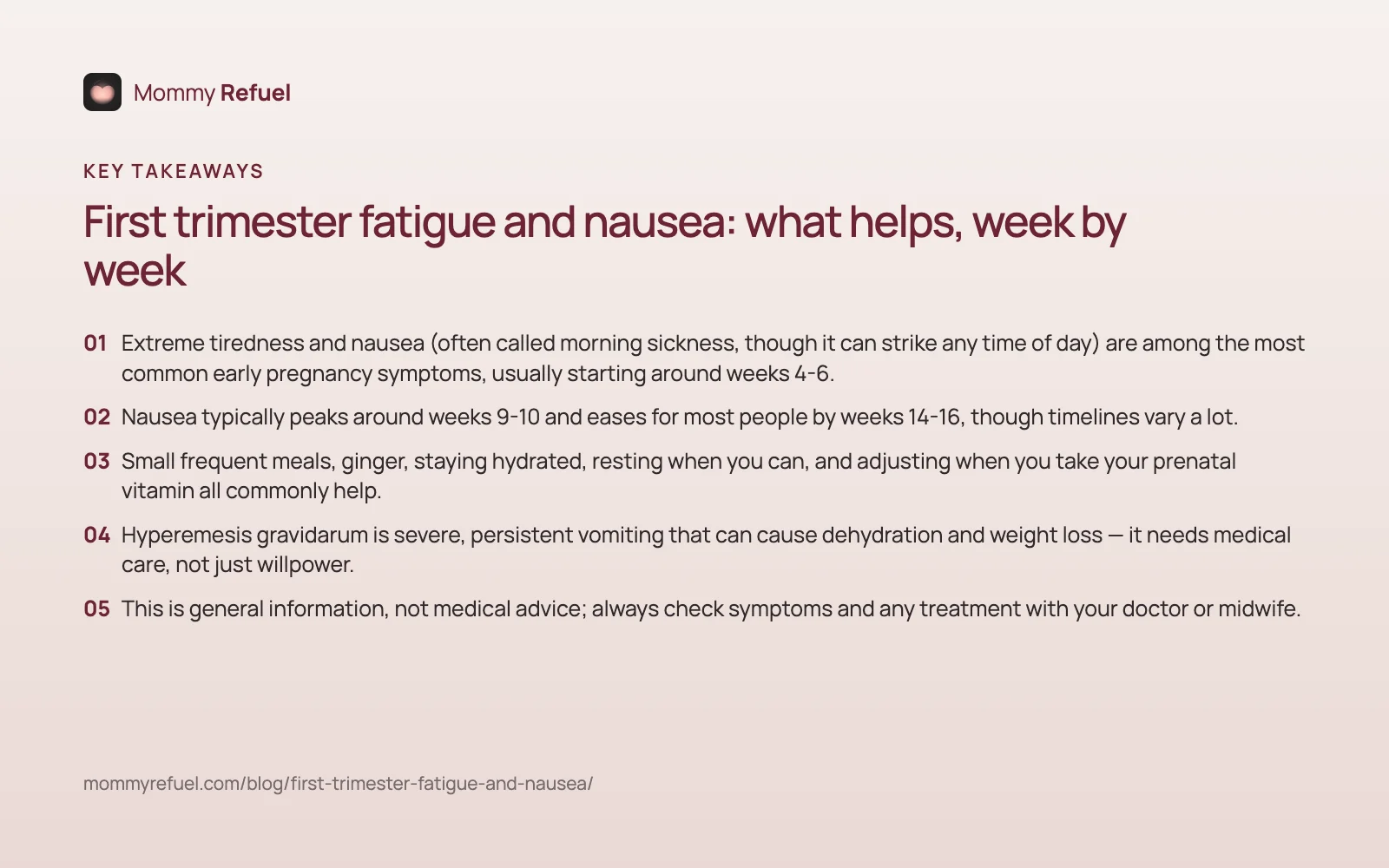
- Extreme tiredness and nausea (often called morning sickness, though it can strike any time of day) are among the most common early pregnancy symptoms, usually starting around weeks 4-6.
- Nausea typically peaks around weeks 9-10 and eases for most people by weeks 14-16, though timelines vary a lot.
- Small frequent meals, ginger, staying hydrated, resting when you can, and adjusting when you take your prenatal vitamin all commonly help.
- Hyperemesis gravidarum is severe, persistent vomiting that can cause dehydration and weight loss — it needs medical care, not just willpower.
- This is general information, not medical advice; always check symptoms and any treatment with your doctor or midwife.
What's common in the first trimester?
Two of the most talked-about early pregnancy symptoms are overwhelming fatigue and nausea. Both are extremely common and, while uncomfortable, are usually not a sign that anything is wrong.
- Fatigue. Many people describe it as a heaviness that sleep doesn't quite fix, driven by rising progesterone, the extra work your body is doing to build a placenta, and lower blood sugar and blood pressure.
- Nausea and vomiting. Often called "morning sickness," but it can happen at any time of day, or all day. According to the NHS, it affects roughly 8 in 10 pregnant women in some form, and around 1 in 100 experience a more severe version.
Both usually start around weeks 4 to 6 of pregnancy. Nausea tends to peak around weeks 9 to 10, and for most people it noticeably eases by weeks 14 to 16 — though some feel better sooner, and others carry symptoms longer. There is a wide range of "normal" here.
What helps with nausea day to day?
There's no single fix, but a few approaches help many people take the edge off:
- Small, frequent meals rather than three large ones — an empty stomach can make nausea worse.
- Bland, easy foods like crackers, toast or plain rice, especially first thing in the morning before getting out of bed.
- Ginger in tea, chews, or capsules is one of the more commonly recommended options and is generally considered safe in pregnancy, per ACOG — check the amount and product with your doctor or pharmacist.
- Cold or room-temperature food can be easier to tolerate than hot food, since strong smells often trigger nausea.
- Staying hydrated with small, frequent sips rather than large drinks, especially if plain water is unappealing — try it cold, with ice, or with a slice of lemon.
- Avoiding known triggers — certain smells, packed public transport, rich or spicy food, or an empty stomach in the morning.
- Vitamin B6 and other options exist too; some people find relief with acupressure wristbands. Ask your doctor before adding any supplement beyond your standard prenatal vitamin.
If nausea makes your prenatal vitamin hard to keep down, ask your doctor or pharmacist about switching the time of day you take it, taking it with a snack, or trying a different formulation. Don't stop it without checking first.
Medication such as ondansetron or other anti-nausea prescriptions can help in more difficult cases — this is a conversation for your doctor, who can weigh the options and dosing for your situation. This article can't give that guidance.

What helps with fatigue?
First trimester exhaustion often responds less to "pushing through" and more to genuinely lowering the load where you can:
- Rest when your body asks for it — a short nap, an early night, or simply sitting down rather than powering through.
- Protect your sleep window even if the quality is patchy; going to bed earlier can matter more than sleeping longer.
- Eat regularly — skipped meals and dips in blood sugar can make tiredness worse alongside nausea.
- Gentle movement, like a short walk, can help some people feel less foggy, without adding to exhaustion the way harder exercise might right now.
- Notice your pattern. A quick daily check-in on energy, sleep and symptoms can help you see whether things are trending better or worse over the weeks, rather than judging each day in isolation.
This is a season where "doing less" is often the medically sensible choice, not a failure of willpower.
Red flags: when nausea becomes hyperemesis gravidarum
Most nausea in pregnancy, while unpleasant, doesn't need emergency care. But a smaller number of people develop hyperemesis gravidarum — severe, persistent nausea and vomiting that can lead to dehydration, weight loss and electrolyte imbalance, and generally needs medical treatment.
Contact your doctor or midwife promptly, and seek urgent care if needed, if you notice:
- You can't keep any fluids down for 24 hours or more.
- Vomiting more than three or four times a day, or vomiting blood.
- Signs of dehydration: dark urine, urinating much less than usual, a very dry mouth, or feeling dizzy or faint when standing.
- Noticeable weight loss.
- Rapid heartbeat, confusion, or fainting.
- Severe abdominal pain, fever, or symptoms that come on suddenly and severely rather than building gradually.
Hyperemesis gravidarum is a recognized medical condition, not "bad morning sickness" — treatment can include anti-sickness medication, IV fluids, and sometimes a short hospital stay, and getting help early tends to make it more manageable. If you're ever unsure whether what you're feeling is urgent, it's always reasonable to call your midwife, doctor, or an urgent care line and ask.
Navigating work and rest
Fatigue and nausea can collide directly with work, caregiving and everyday commitments, and that tension is real.
- Pace yourself. Where you can, front-load demanding tasks for times of day when you tend to feel better, and build in short breaks rather than one long push.
- Be honest with a manager if you need to. You're not obligated to share pregnancy details before you're ready, but if symptoms are affecting your work, a general note that you're managing a temporary health issue can open the door to flexibility — adjusted hours, more breaks, or remote days — without going into specifics.
- Prioritize sleep over almost everything else during this stretch. It's a short-term trade-off that tends to pay off in how you feel the next day.
- Set realistic expectations with yourself, your partner and your household. This is genuinely one of the more physically demanding parts of pregnancy for many people, even though it's invisible from the outside.
- If you have upcoming appointments, a simple written summary of your symptoms and questions can save time and stress. A doctor visit summary pulled from what you've already logged can help you walk in with a clear list instead of trying to remember everything on the spot.
Questions mothers ask
When does first trimester nausea usually start and end?
It typically starts around weeks 4 to 6, often peaks around weeks 9 to 10, and eases for most people by weeks 14 to 16 — but the exact timing varies a lot from person to person.
Is it normal to have nausea all day, not just in the morning?
Yes. Despite the name "morning sickness," nausea can occur at any time of day or last all day for many pregnant people.
How is hyperemesis gravidarum different from normal morning sickness?
Hyperemesis gravidarum involves severe, persistent vomiting that leads to dehydration, weight loss, or electrolyte problems, and usually needs medical treatment — it goes beyond the typical discomfort of morning sickness.
Is it safe to take ginger for pregnancy nausea?
Ginger is generally considered a reasonable option for mild to moderate nausea in pregnancy, but check the form and amount with your doctor or pharmacist before starting it.
Can I take anti-nausea medication during pregnancy?
Some medications, such as ondansetron, may be prescribed in more difficult cases, but any decision about medication and dosing should be made with your doctor, not on your own.
Sources

Articles from the Mommy Refuel team: practical, honest reading on maternal wellbeing and family life. General information, never a substitute for professional care.
This article is general information for wellbeing, not medical advice, diagnosis or treatment. If you are worried about your health or your baby’s, talk to your doctor, midwife or health visitor. In an emergency, or if you have thoughts of harming yourself, contact local emergency services now.