
Key takeaways
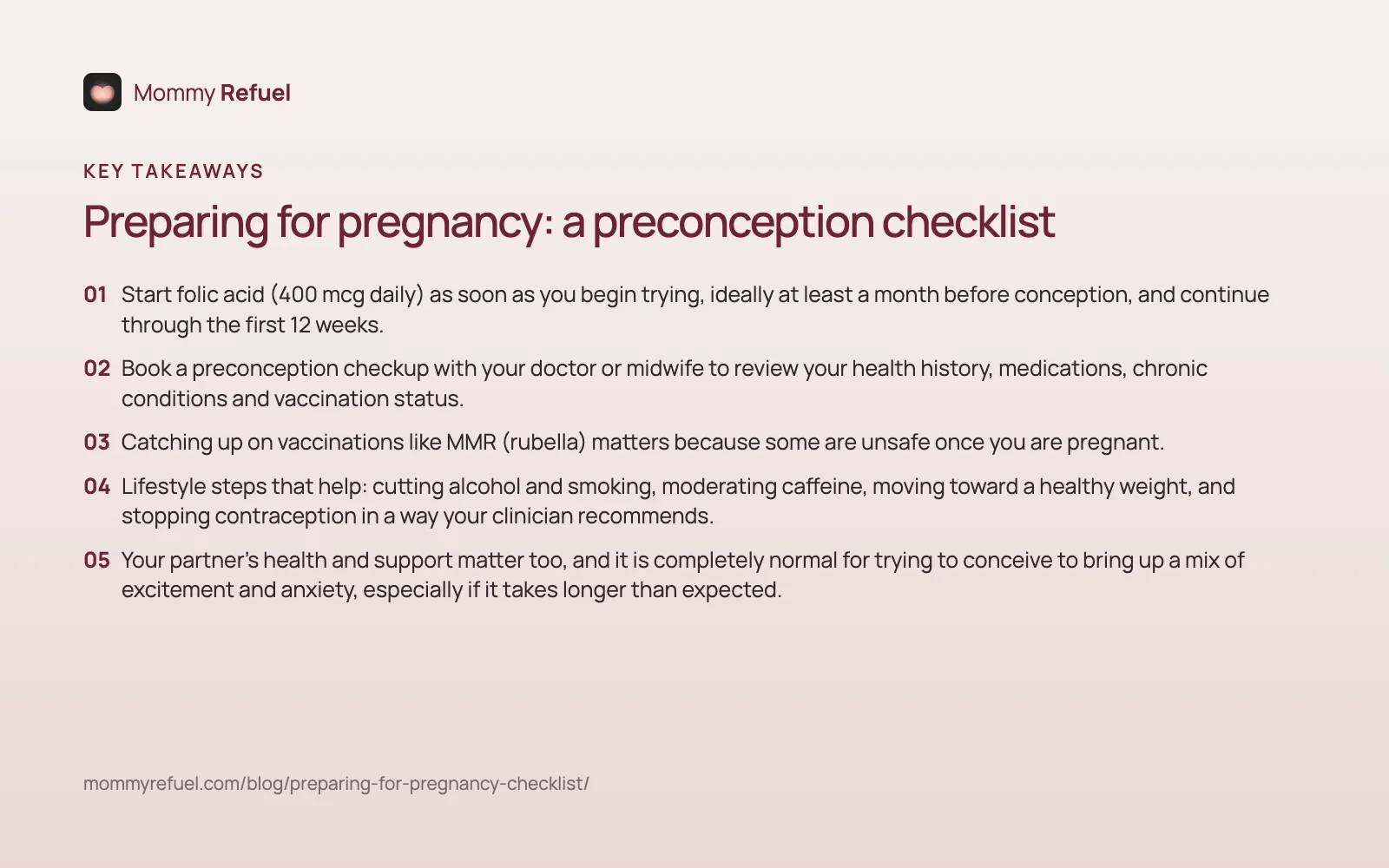
- Start folic acid (400 mcg daily) as soon as you begin trying, ideally at least a month before conception, and continue through the first 12 weeks.
- Book a preconception checkup with your doctor or midwife to review your health history, medications, chronic conditions and vaccination status.
- Catching up on vaccinations like MMR (rubella) matters because some are unsafe once you are pregnant.
- Lifestyle steps that help: cutting alcohol and smoking, moderating caffeine, moving toward a healthy weight, and stopping contraception in a way your clinician recommends.
- Your partner's health and support matter too, and it is completely normal for trying to conceive to bring up a mix of excitement and anxiety, especially if it takes longer than expected.
Start with folic acid
Folic acid is one of the few preconception steps backed by very clear, consistent guidance. The NHS and the CDC both recommend a daily supplement of 400 micrograms (mcg) of folic acid for anyone trying to conceive, starting as soon as you begin trying and ideally about a month before, then continuing through the first 12 weeks of pregnancy.
Folic acid helps reduce the risk of neural tube defects, such as spina bifida, which can develop very early, often before you know you are pregnant. That is exactly why it is a preconception step rather than something to start after a positive test. If you have a personal or family history of neural tube defects, diabetes, or take certain medications, ask your doctor whether you need a higher dose. Eating more folate-rich foods, like leafy greens, beans and fortified cereals, is a helpful addition, but it does not replace the supplement.
Book a preconception checkup
A visit to your doctor or midwife before you start trying is one of the most useful things you can do. This is sometimes called preconception care, and it is a chance to talk through your health history in a calm, unhurried way rather than during an already-confirmed pregnancy.
A typical preconception checkup can cover:
- Your general health, family history and any past pregnancy complications.
- Chronic conditions such as diabetes, thyroid disorders, high blood pressure or epilepsy, and how well they are currently managed.
- A review of your current medications and supplements, since some need adjusting before pregnancy.
- Your vaccination history.
- Any concerns about fertility, cycle regularity or previous miscarriage.
Do not stop or change any prescribed medication on your own before checking with the clinician who prescribed it. Some medications are considered safe in pregnancy, some need a dose adjustment, and a smaller number need to be switched well before conception. This applies to conditions such as epilepsy, depression and anxiety, autoimmune disease, diabetes and thyroid disorders, where stopping treatment abruptly can be riskier than staying on it. ACOG describes prepregnancy care as a chance to identify and address risk factors before conception, which generally gives better outcomes than addressing them for the first time once you are already pregnant.
Catch up on vaccinations
Being up to date on certain vaccines before pregnancy matters because catching some infections while pregnant can affect your baby, and a few vaccines cannot safely be given once you are pregnant. The MMR vaccine (measles, mumps and rubella) is a key one to check: rubella infection during pregnancy can seriously harm a developing baby, and because MMR is a live vaccine, NHS guidance advises waiting at least one month after having it before trying to conceive.
If you are not sure whether you are immune to rubella or chickenpox (varicella), your doctor can check this with a simple blood test and vaccinate you beforehand if needed. It is worth asking about your vaccination status, including any other routine vaccines you may be due, at your preconception checkup rather than leaving it until later.

Lifestyle factors and stopping contraception
A few lifestyle adjustments are consistently recommended when you start trying to conceive:
- Alcohol and smoking. Both are best stopped, since they are linked to complications such as premature birth and birth defects.
- Caffeine. Many clinicians suggest moderating caffeine intake rather than eliminating it entirely; ask your provider what they recommend.
- Weight and movement. Being significantly overweight or underweight can affect fertility and pregnancy risk, so gentle, sustainable steps toward a healthy weight and regular movement are worth starting early rather than during pregnancy itself.
- Environmental exposures. Reducing contact with harmful chemicals at home or work is also part of general preconception guidance.
On timing: how quickly your cycle returns to a predictable pattern after stopping hormonal contraception varies a lot from person to person, so ask your doctor what to expect for your specific method, and consider tracking your cycle for a cycle or two before actively trying so you have a clearer sense of your pattern.
Your partner's role matters too
Preparing for pregnancy is not only about the person who will carry the pregnancy. A partner's overall health, including nutrition, alcohol and smoking habits, and managing any chronic conditions, plays a role in fertility and general wellbeing during this time. It is also worth a partner having their own checkup if they have health concerns or a family history worth flagging.
Beyond the physical side, trying to conceive is something couples go through together. Sharing habits like cutting back on alcohol, cooking healthier meals or exercising together can make the changes easier to stick to, and showing up for each other emotionally, especially if the process takes longer than expected, matters just as much as any checklist item.
The emotional side of trying to conceive
It is worth naming honestly: trying to conceive can bring a real mix of feelings. Excitement and hope are common, but so are anxiety, impatience and, for many people, a harder stretch if it takes longer than expected. None of that means something is wrong with you or your relationship. Cycles vary, timing is not always predictable, and the wait can be genuinely hard even when everything is medically fine.
Some people find it grounding to keep a simple record of how they are feeling, physically and emotionally, through this period rather than carrying it all in their head. A short daily check-in or a private journal can be a low-pressure way to notice patterns in your cycle and your mood over time, and to have something concrete to bring to a doctor if you want to talk through what you are noticing. It will not tell you when you will conceive, but it can make the waiting feel a little less foggy.
When to see a doctor
This article is general information from a wellbeing app, not medical advice, and it cannot replace a conversation with your doctor or midwife. Please see a doctor if:
- You are 35 or under and have not conceived after 12 months of trying, or over 35 and have not conceived after 6 months.
- You have irregular or absent periods, or know or suspect you have a condition that affects fertility.
- You have a chronic health condition, take regular medication, or have had pregnancy complications before.
- You are unsure about your vaccination or immunity status.
- You simply want guidance before you start trying, even without a specific concern.
A preconception visit is a normal, proactive step, not something to save for when a problem appears.
Questions mothers ask
When should I start taking folic acid before pregnancy?
As soon as you start trying to conceive, ideally about a month beforehand, at a dose of 400 micrograms daily, and continue through the first 12 weeks of pregnancy. Ask your doctor if you might need a higher dose.
Do I need a checkup before trying to conceive?
It is strongly recommended. A preconception checkup lets your doctor or midwife review your health history, medications, chronic conditions and vaccination status before you conceive, when there is more time to make adjustments safely.
Which vaccinations should I check before pregnancy?
MMR (measles, mumps and rubella) is a key one, since rubella can seriously harm a developing baby and the vaccine itself needs to be given at least a month before conceiving. Ask your doctor about your full vaccination status, including varicella (chickenpox) immunity.
Is it normal to feel anxious while trying to conceive?
Yes. A mix of excitement, impatience and anxiety is common, especially if it takes longer than expected. This does not mean anything is wrong, but if the emotional load feels heavy, it is worth talking to your doctor or a mental health professional.
Can Mommy Refuel tell me when I will get pregnant?
No. Mommy Refuel is a wellbeing app, not a medical or fertility tracking service. Features like daily check-ins and journaling can help you notice patterns in how you feel, but only a doctor can assess your fertility or health.
Sources

Articles from the Mommy Refuel team: practical, honest reading on maternal wellbeing and family life. General information, never a substitute for professional care.
This article is general information for wellbeing, not medical advice, diagnosis or treatment. If you are worried about your health or your baby’s, talk to your doctor, midwife or health visitor. In an emergency, or if you have thoughts of harming yourself, contact local emergency services now.