
Key takeaways
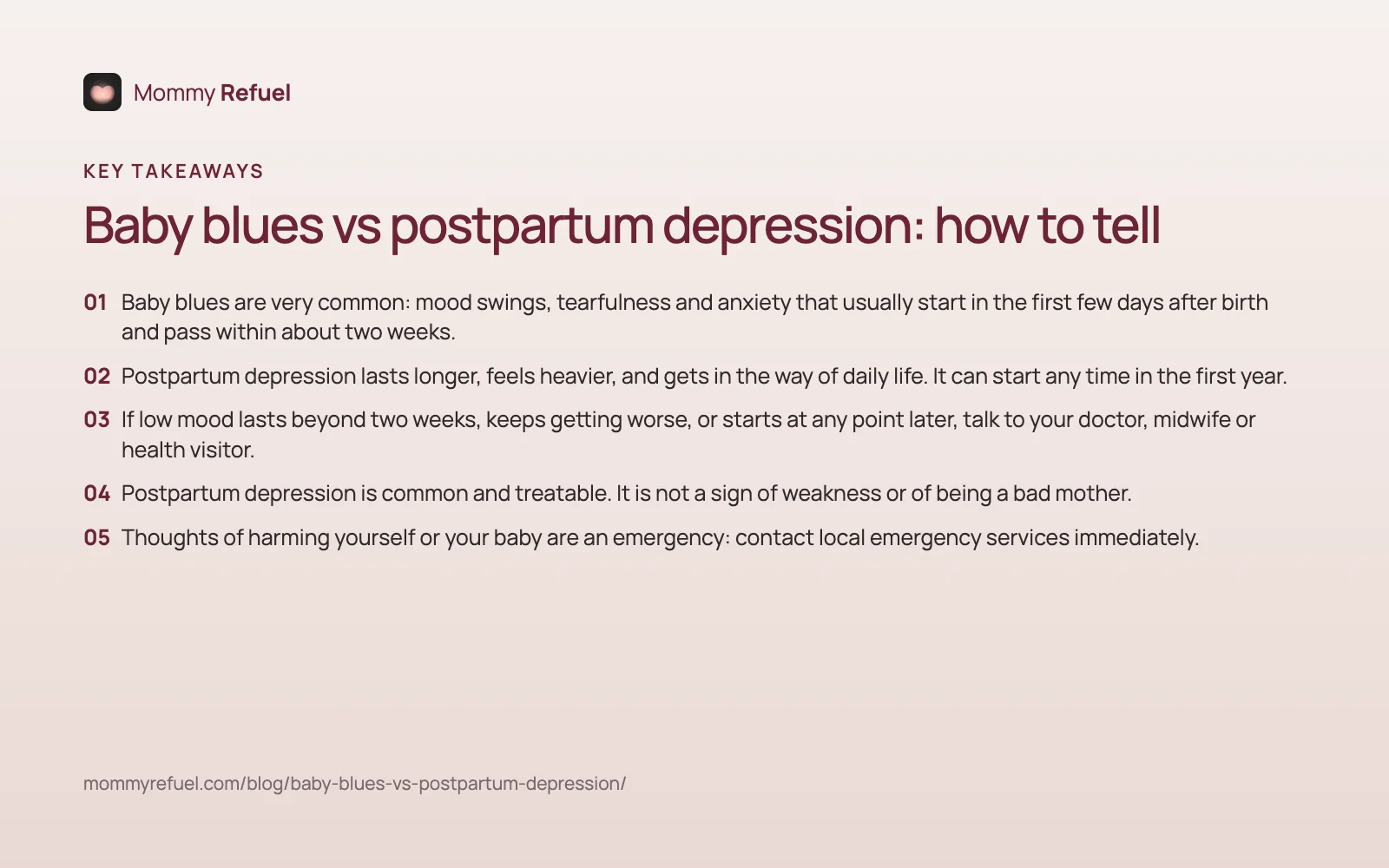
- Baby blues are very common: mood swings, tearfulness and anxiety that usually start in the first few days after birth and pass within about two weeks.
- Postpartum depression lasts longer, feels heavier, and gets in the way of daily life. It can start any time in the first year.
- If low mood lasts beyond two weeks, keeps getting worse, or starts at any point later, talk to your doctor, midwife or health visitor.
- Postpartum depression is common and treatable. It is not a sign of weakness or of being a bad mother.
- Thoughts of harming yourself or your baby are an emergency: contact local emergency services immediately.
What are the baby blues?
In the first days after giving birth, many mothers feel suddenly tearful, irritable or anxious, sometimes all within the same hour. You might cry at an advert, feel flat when you expected to feel joy, or lie awake worrying even when the baby is asleep. This is what people call the baby blues, and it is very common.
The baby blues usually begin within the first few days after birth and ease on their own within about two weeks. They are linked to the big hormonal shifts after delivery, combined with broken sleep, physical recovery and the sheer size of the change in your life.
Typical signs include:
- mood swings and crying without a clear reason
- feeling overwhelmed, anxious or irritable
- trouble sleeping, even when you have the chance
- feeling unsure of yourself as a parent
Uncomfortable as they are, the baby blues do not stop you from functioning. There are still good moments in the day, and the heaviness lifts as the days go on.
What is postpartum depression?
Postpartum depression, also called postnatal depression, is a type of depression that happens after having a baby. According to the NHS, it affects more than 1 in 10 women within a year of giving birth. Partners can experience it too.
It can look like the baby blues at first, but it lasts longer and runs deeper. It can begin in the first weeks or appear months later, anywhere within the first year. Signs can include:
- a persistent low mood or sadness most of the day, on most days
- losing interest or pleasure in things, including time with your baby
- feeling hopeless, numb, guilty or worthless
- constant tiredness and lack of energy that rest does not fix
- changes in appetite, or trouble sleeping even when the baby sleeps
- difficulty concentrating or making decisions
- pulling away from partner, friends or family
- frightening or intrusive thoughts, including thoughts of harming yourself or your baby
Postpartum depression is a health condition, not a personal failing. It is treatable, and most people recover with the right support.
Baby blues vs postpartum depression: the key differences
There is no single test you can do at home, but three questions help you see which side of the line you might be on.
1. When did it start, and how long has it lasted?
The baby blues usually appear in the first few days and fade within about two weeks. If low mood is still there after two weeks, is getting worse instead of better, or starts later in the first year, that points towards something more than the blues.
2. How intense is it?
With the baby blues, feelings come and go and there are lighter moments in between. With postpartum depression, the low mood tends to be steady and heavy, and it can feel like a fog that does not lift.
3. Is it affecting daily life?
If you are struggling to look after yourself, eat, get through the day, or feel connected to your baby, that is a signal to reach out, whatever the timing.
Some mothers find it helpful to notice patterns over time. A quick daily check-in can show whether hard days are becoming fewer, or piling up. This is a reflection for you, not a diagnosis, but it can make it easier to describe what has been happening when you speak to a professional.
What helps with the baby blues
For the baby blues, gentle, practical support usually makes the biggest difference:
- Rest whenever you can, and let someone else take a night feed or a morning shift if possible.
- Eat regular, simple meals and keep water close by.
- Say out loud how you feel to someone you trust. Naming it often takes some of the weight off.
- Accept help with meals, laundry and visitors. It is fine to limit visits.
- Get a little daylight or fresh air, even for ten minutes.
- Lower the bar. The early weeks are about recovery, not getting everything done.
These steps also support you if you have postpartum depression, but they are not a replacement for professional care. Depression is not something you should have to push through alone.
When and how to get professional help
Talk to your doctor, midwife or health visitor if:
- low mood, anxiety or tearfulness last longer than two weeks after birth
- your feelings are getting worse rather than better
- you are finding it hard to cope with daily life or to care for yourself or your baby
- symptoms start at any point in the first year
You do not need to be sure it is depression before you ask. Saying "I have not felt like myself since the birth" is enough to start the conversation. Treatment may include talking therapies, practical and social support and, in some cases, medication that your doctor can discuss with you, including options compatible with breastfeeding.
If it is hard to find the words in the moment, write them down beforehand. A doctor visit summary can bring together your questions and recent wellbeing notes so you can show them rather than having to remember everything.
Urgent help: if you have thoughts of harming yourself or your baby, or you feel you cannot keep yourself safe, contact local emergency services immediately. Also seek urgent help if you, or someone close to you, notice confusion, seeing or hearing things that are not there, extreme agitation or very unusual beliefs in the days or weeks after birth. These can be signs of postpartum psychosis, a rare but serious condition that needs emergency care.
How partners and family can notice and help
Mothers with postpartum depression often do not recognise it in themselves, or feel too ashamed or exhausted to say anything. The people closest to them are often the first to notice. Things worth paying attention to:
- she seems withdrawn, flat or unusually tearful weeks after the birth
- she says things like "I am a bad mother" or "the baby would be better off without me"
- she is not eating or sleeping, even when she has the chance
- she seems constantly anxious, on edge or unable to relax
- she has lost interest in things she used to enjoy
How to help:
- Ask gently and listen without trying to fix it straight away.
- Take on practical tasks without being asked: nights, meals, cleaning, visitors.
- Offer to book or go with her to an appointment.
- Remind her that this is common, treatable and not her fault.
- If she mentions harming herself or the baby, do not wait: contact emergency services.
Partners should look after their own wellbeing too. Fathers and non-birthing partners can also experience depression after a baby arrives, and it is worth talking to a doctor about that as well.
Where an app can help, and where it cannot
Mommy Refuel is a free iPhone app designed to help mothers notice how they are really doing. A one-minute check-in, a private journal and weekly recovery reports can make patterns visible, and the Ask for Help and Care Circle features make it easier to let trusted people know when you need support.
It is not a diagnostic tool and it does not replace your doctor, midwife or health visitor. Refuel AI is non-clinical and has a safety layer that points you towards real help when a conversation suggests you might be at risk. You can read more about how that works in our AI safety approach.
Questions mothers ask
How long do the baby blues last?
The baby blues usually start in the first few days after birth and ease on their own within about two weeks. If low mood lasts longer than that or gets worse, talk to your doctor, midwife or health visitor.
Can the baby blues turn into postpartum depression?
Sometimes symptoms that start as the baby blues do not ease and become postpartum depression. That is why it is worth paying attention if you do not feel better after two weeks.
Can postpartum depression start months after birth?
Yes. Postpartum depression can begin at any point in the first year after having a baby, not only in the first weeks.
Is postpartum depression treatable?
Yes. Postpartum depression is treatable, and most people recover with support such as talking therapies, practical help and, where appropriate, medication discussed with a doctor.
Can partners get postpartum depression?
Yes. Fathers and non-birthing partners can also experience depression after a baby arrives. They deserve support too and can speak to their own doctor.
What should I do if I have thoughts of harming myself or my baby?
Treat it as an emergency and contact local emergency services immediately. These thoughts are a sign that you need urgent support, and help is available.
Sources

Articles from the Mommy Refuel team: practical, honest reading on maternal wellbeing and family life. General information, never a substitute for professional care.
This article is general information for wellbeing, not medical advice, diagnosis or treatment. If you are worried about your health or your baby’s, talk to your doctor, midwife or health visitor. In an emergency, or if you have thoughts of harming yourself, contact local emergency services now.