
Key takeaways
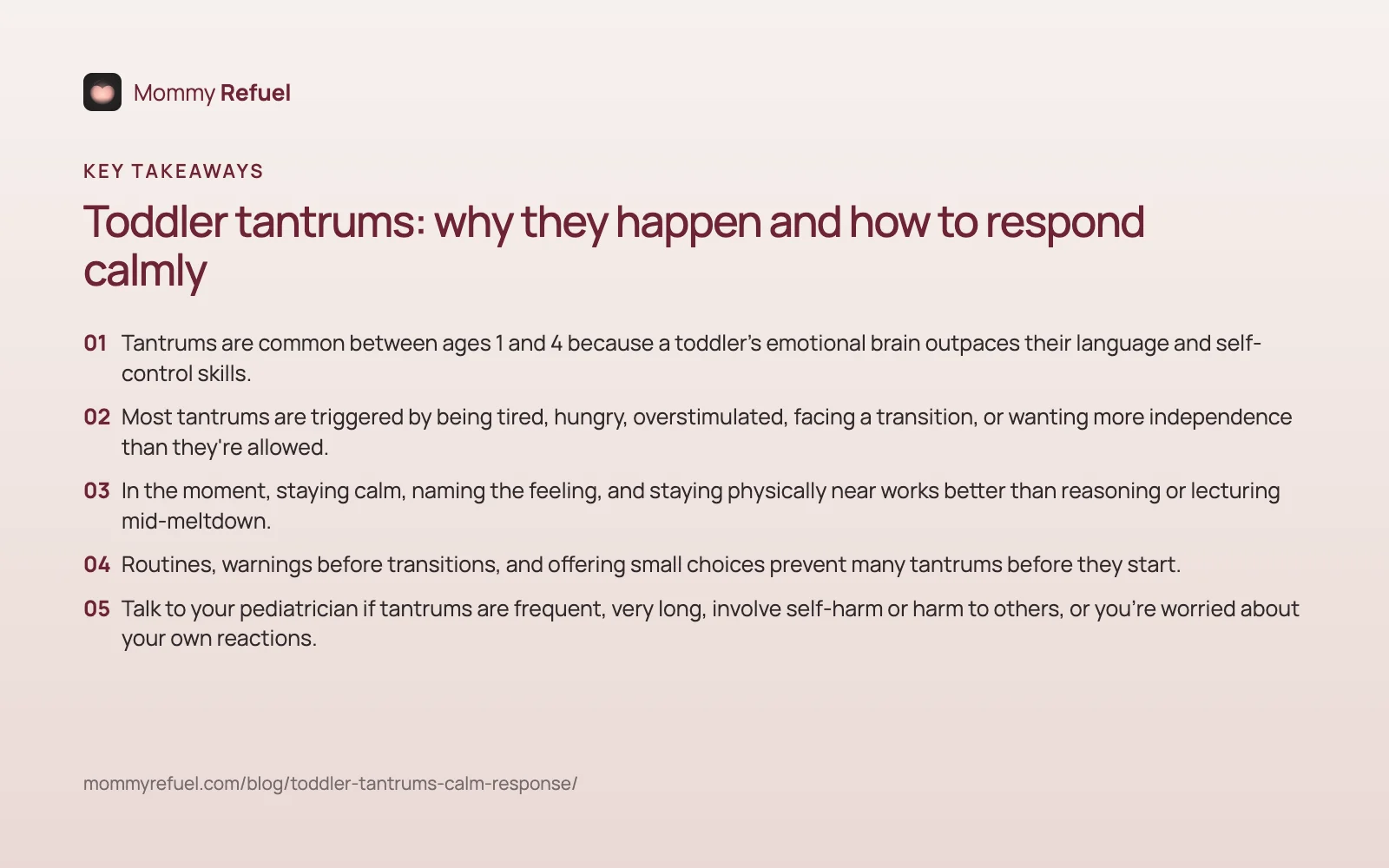
- Tantrums are common between ages 1 and 4 because a toddler's emotional brain outpaces their language and self-control skills.
- Most tantrums are triggered by being tired, hungry, overstimulated, facing a transition, or wanting more independence than they're allowed.
- In the moment, staying calm, naming the feeling, and staying physically near works better than reasoning or lecturing mid-meltdown.
- Routines, warnings before transitions, and offering small choices prevent many tantrums before they start.
- Talk to your pediatrician if tantrums are frequent, very long, involve self-harm or harm to others, or you're worried about your own reactions.
Why do toddlers have tantrums?
Tantrums are one of the most predictable parts of toddlerhood, and they are also one of the most normal. Between about age 1 and 4, children are living through huge brain development while their tools for managing feelings are still very basic. According to ZERO TO THREE, toddlers often have tantrums because they lack the skills to handle big emotions like anger and frustration, and because they are discovering they are separate people from their parents without yet having the words to say what they think or feel.
In practice, this means a toddler can feel something enormous, a wave of frustration, disappointment or excitement, with almost none of the vocabulary or impulse control an older child or adult would use to manage it. The tantrum is not manipulation. It is what a nervous system that is still under construction looks like under pressure.
It helps to think of it as a gap between a big feeling and a small toolkit. An older child or adult can usually pause, name what they feel, and choose a response. A toddler often cannot do any of those three steps yet, so the feeling comes out as crying, screaming, dropping to the floor, or hitting. As language, memory and self-control mature over the preschool years, that gap gradually closes, which is part of why tantrums naturally become less frequent with age.
What usually triggers a tantrum?
Tantrums rarely come out of nowhere. Common triggers include:
- Being tired. A missed nap or a late bedtime lowers the threshold for everything else.
- Being hungry. Low blood sugar makes big feelings much harder to manage.
- Overstimulation. Too much noise, too many people, or a day with no downtime.
- Transitions. Leaving the park, turning off a screen, or switching activities without warning.
- Wanting autonomy. Toddlers are testing what they can control, and being told no to something they wanted to do themselves can set off a storm.
Noticing your own child's pattern, what time of day, what situations, what came right before, is one of the most useful things you can do, because it turns a mysterious meltdown into something more predictable.
What to say and do in the moment
During an actual tantrum, a toddler's thinking brain is offline. Reasoning, long explanations, or negotiating rarely work here, and can even prolong things. What tends to help instead:
- Stay calm yourself. ZERO TO THREE describes this as co-regulation: when a child is having a hard time, your steady presence helps them borrow your calm until they can find their own.
- Stay physically near. You do not need to fix the feeling, just be a safe, steady presence nearby.
- Name the feeling, briefly. "You're really mad we have to leave" or "That was so frustrating" tells a toddler you see what's happening, even if they can't respond yet.
- Keep language short and simple. A melting-down toddler cannot process a paragraph. A few calm words repeated gently go further than an explanation.
- Wait it out. Once the storm passes, that is the moment for a hug, a quiet word, or moving on together, not before.

Common mistakes (and why they're so easy to make)
Every parent has done some of these, especially on a hard day. Knowing why they backfire can make it easier to try something different next time.
- Long lectures mid-meltdown. It feels natural to explain, but a toddler in full tantrum mode cannot absorb it. Save the conversation for afterward.
- Shaming or "big kids don't do this." This adds embarrassment to an already overwhelming feeling, without teaching a better way to handle it.
- Giving in inconsistently. The NHS notes that giving in will not help in the long term, and if you've said no, changing your mind just to end a tantrum can teach a child that tantrums work. The tricky part is that occasional giving in, even rarely, can make tantrums more persistent, not less, so consistency matters more than any single decision.
None of this means you have to be perfect. A calmer response most of the time, with room for off days, is what actually helps.
How to prevent tantrums before they start
You cannot prevent every tantrum, and you should not aim to. But a few habits reduce how often they happen:
- Keep routines predictable. HealthyChildren.org notes that when children know what to expect, they are less likely to have a tantrum.
- Give warnings before transitions. "Two more minutes, then we're putting on shoes" gives a toddler time to adjust instead of being surprised.
- Offer small, real choices. "Red cup or blue cup?" gives a sense of control without opening up a negotiation.
- Protect sleep and food basics. Having a healthy snack ready, or prioritizing naps and bedtime, removes some of the most common triggers before they build up.
When tantrums might need professional advice
Most tantrums are a normal, if exhausting, part of development, and they typically become less frequent as language and self-regulation grow, often easing by around age 4. It is worth talking to your pediatrician or family doctor if:
- Tantrums happen very often, or regularly last a long time.
- Your child hurts themselves or others during tantrums.
- Breath-holding spells happen and concern you.
- Your child rarely or never seems to calm down, even with support.
- You notice a regression in skills your child previously had.
- You're worried about your own reactions during tantrums, including feeling out of control or overwhelmed.
This article is general information, not a diagnosis. A pediatrician can look at your child's specific pattern and rule out anything that needs closer attention.
Taking care of yourself during a tantrum-heavy phase
Staying calm through repeated meltdowns takes real energy, and it is normal to feel drained by it. A quick daily check-in with Mommy Refuel can help you notice when you're running low before it shows up as a shorter fuse with your toddler.
Questions mothers ask
At what age do toddler tantrums usually stop?
Tantrums are most common between ages 1 and 3, and they typically become much less frequent by around age 4 as language and self-regulation develop.
Should I ignore my toddler during a tantrum?
Staying calm and physically near, without lecturing or negotiating, tends to work better than fully ignoring your child, who often needs a steady, safe presence to help them settle.
Is it bad to give in to a tantrum sometimes?
Occasionally giving in to end a tantrum can teach a child that tantrums are an effective way to get what they want, so it helps to stay consistent once you've said no.
Can screen time cause more tantrums?
Turning off a screen is a common transition trigger. A short warning before screen time ends can make the switch easier.
When should I talk to a pediatrician about tantrums?
Reach out if tantrums are very frequent or long, involve harm to your child or others, include breath-holding spells that worry you, or if you notice your child struggling to calm down at all, or losing skills they previously had.
Sources

Articles from the Mommy Refuel team: practical, honest reading on maternal wellbeing and family life. General information, never a substitute for professional care.
This article is general information for wellbeing, not medical advice, diagnosis or treatment. If you are worried about your health or your baby’s, talk to your doctor, midwife or health visitor. In an emergency, or if you have thoughts of harming yourself, contact local emergency services now.